
Early Signs of Hormonal Hair Loss in Women and How to Treat It

It is remarkably easy to miss the subtle, early warning signs of hormonal hair thinning. In the busy rush of everyday life, many women write off initial changes as seasonal shedding, a temporary reaction to stress, or the inevitable result of aging. However, catching hormonal hair loss in its earliest stages is the single most effective way to preserve your hair density and protect long-term follicular health. When internal chemical signals begin to shift, your hair provides an immediate outward reflection of that internal disruption. While hormonal hair loss can feel unpredictable and frustrating, recognizing its subtle early markers and implementing targeted medical and lifestyle interventions can successfully halt follicular miniaturization and restore your hair health.

To catch these shifts early, one must look beyond sudden clumps in the shower and recognize the more subtle clues of early-stage shedding. One of the most common indicators is a gradually widening part … Continue Reading >>>

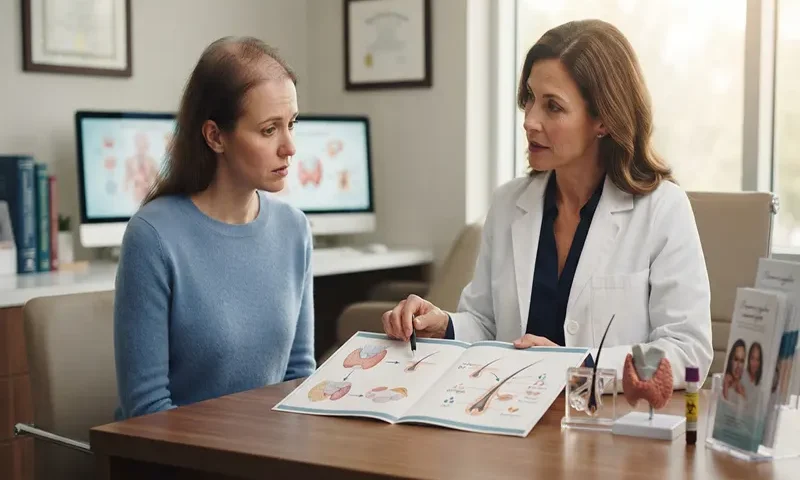
Common Hormonal Causes of Sudden Hair Loss in Women

Experiencing sudden, unexpected hair shedding can be an intensely distressing and shocking experience. When clumps of hair begin appearing in your shower drain or on your hairbrush overnight, it often triggers immediate anxiety, impacting your self-confidence and emotional well-being. Unlike the slow, gradual thinning associated with aging, acute hair loss feels abrupt and alarming. However, it is important to know that you are not alone, and this physical symptom is rarely random. Sudden hair loss in women is frequently triggered by acute hormonal shifts or systemic endocrine disruptions. While unsettling, these underlying root causes can be accurately diagnosed and successfully reversed with proper medical guidance.

To understand why this happens, we must first look at the biology of the hair cycle. Hair follicles operate in a continuous cycle consisting of the anagen (growth) phase, the catagen (transition) phase, and the telogen (resting) phase. Under normal circumstances, about 85 to 90 … Continue Reading >>>

Best Medical Treatment Options for Hair Loss in Women Over 50

Experiencing hair thinning during or after the transition through menopause can feel deeply unsettling. Society often ties a woman’s identity, youth, and vitality to her hair, making the discovery of a widening part or a receding ponytail a profoundly emotional challenge. However, you are far from alone in this journey. Clinical data reveals that over 50% of women experience significant, noticeable hair loss by the time they reach age 50 to 60. Far from being a mere cosmetic nuisance, mature hair thinning is a medical reality driven by complex physiological shifts. Fortunately, modern dermatology offers a robust suite of FDA-approved and off-label medical interventions that can successfully halt loss and stimulate regrowth.

To address hair loss effectively, one must first understand its root causes. Unlike male pattern baldness, which typically manifests as a receding hairline and localized vertex balding, female pattern hair loss (FPHL)—clinically known as androgenetic alopecia—presents as diffuse … Continue Reading >>>