
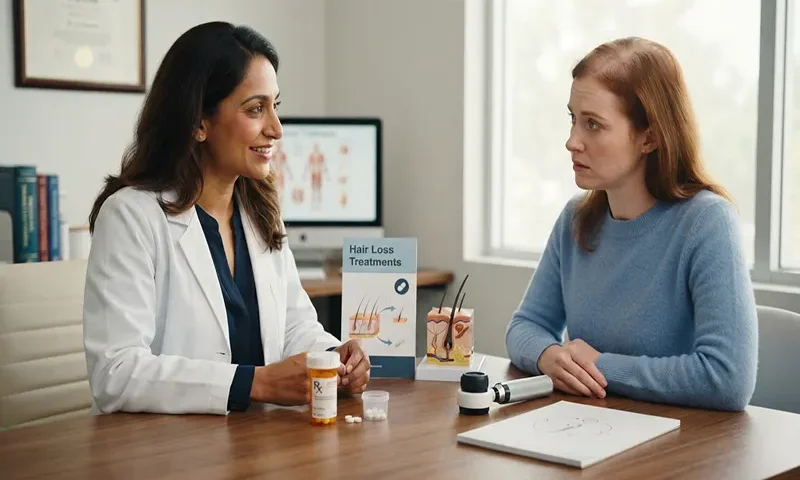
For anyone navigating female pattern hair loss or chronic thinning, applying sticky, messy topical minoxidil solutions or heavy foams twice a day can quickly become an exhausting chore. Between residue build-up on the scalp, greasy hair texture, and the daily friction of compliance, many women struggle to maintain consistency. Fortunately, modern dermatology has ushered in a paradigm-shifting alternative that is transforming hair restoration care. While topical minoxidil has long stood as the traditional gold standard, low-dose oral minoxidil offers a highly effective, remarkably convenient, and clinically proven systemic alternative for women when managed under strict medical supervision.
To truly understand how this therapy evolved, it helps to look at its unexpected history. Minoxidil was originally developed decades ago as a potent oral vasodilator designed to treat severe, treatment-resistant high blood pressure. During clinical trials, researchers noticed a pronounced and universal side effect: patients experienced robust, generalized hair growth, known clinically as hypertrichosis. Recognizing the incredible potential of this side effect, forward-thinking dermatologists eventually adapted the discovery, pioneering ultra-low micro-dosing—typically ranging from 0.5 mg to 2.5 mg daily—specifically tailored for female hair loss. At these fractional doses, the medication stimulates hair growth without causing the dramatic systemic blood pressure drops associated with its high-pressure cardiac origins.
The pharmacological mechanism of low-dose oral minoxidil for women is both elegant and highly efficient. Once ingested, oral minoxidil is absorbed into the bloodstream and metabolized by sulfotransferase enzymes, which are found in exceptionally high concentrations within the roots of hair follicles. Once converted into its active form, the medication widens localized blood vessels and opens potassium channels around the hair bulb. This cellular shift successfully prolongs the anagen (growth) phase of the hair cycle, reverses follicular miniaturization, and delivers a rich supply of oxygen and vital nutrients directly to starving hair roots across the entire scalp simultaneously.
When comparing oral vs topical minoxidil, the practical advantages for patients are substantial. Traditional topicals frequently cause localized contact dermatitis, itching, scaling, or skin irritation, often driven by vehicle agents like propylene glycol. LDOM entirely bypasses the scalp barrier, eliminating topical irritation and offering unmatched daily compliance—swallowing a tiny pill once a day is vastly simpler than managing a liquid dropper routine. Furthermore, systemic oral distribution ensures uniform delivery to every follicle on the scalp, which clinical studies show often yields superior density improvements for women struggling with diffuse female pattern hair loss (FPHL) and chronic telogen effluvium.
However, because LDOM is a systemic medication, it requires a rigorous approach to safety profiles, potential side effects, and ongoing monitoring. While serious adverse events are rare at micro-doses, patients must be aware of potential side effects. The most common is mild hypertrichosis, manifested as peach fuzz on the temples, face, or arms, which can typically be managed easily with minor dosage adjustments or aesthetic hair removal. Other rare side effects can include temporary initial shedding during the first few weeks, transient lightheadedness, or mild peripheral fluid retention.
These considerations highlight the absolute necessity of baseline evaluations and ongoing physician monitoring. A qualified specialist must evaluate your cardiovascular history, review your medications, and prescribe the exact appropriate dosage. Sourcing oral minoxidil online without a prescription is dangerous and medically irresponsible. Additionally, LDOM carries strict contraindications, meaning it must be strictly avoided during pregnancy and breastfeeding.
Ultimately, low-dose oral minoxidil represents a powerful, life-changing tool for women struggling with hair loss, provided it is approached with clinical respect and professional guidance. Hair restoration is a journey that requires patience, adherence, and expert oversight.
If you are tired of messy topical solutions and want to explore a more streamlined, effective approach, take the next step. Consult a board-certified dermatologist specializing in dermatologist prescription hair loss treatments to determine if LDOM is a safe, appropriate fit for your personalized medical care plan.

