
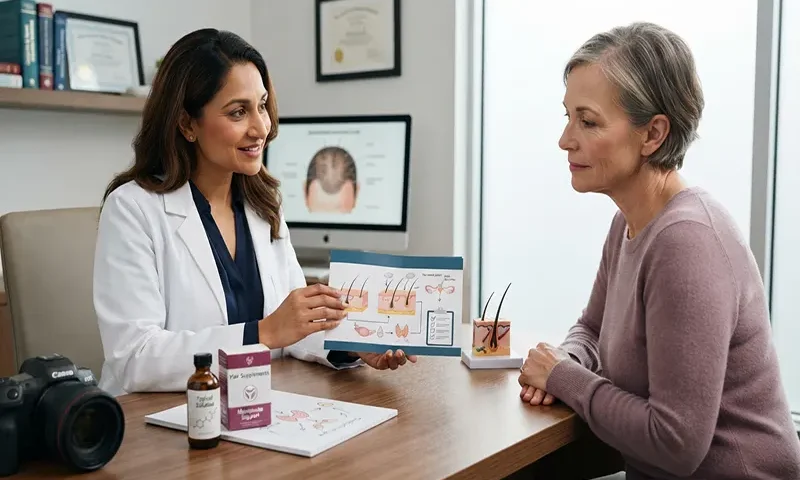
Navigating the physiological transitions of menopause brings a myriad of bodily changes, among which progressive hair thinning can be particularly distressing. For many women, the realization that their familiar hair texture and density are shifting can evoke profound frustration and anxiety. During this life stage, hormonal fluctuations significantly impact follicular health, leading many patients to explore targeted pharmacological interventions to restore their confidence and density. While medications like spironolactone and oral minoxidil offer powerful reversal of menopausal hair loss, evaluating their safety requires careful navigation of age-related cardiovascular shifts, metabolic changes, and individualized endocrine profiles.
The Hormonal Landscape of Menopause and Hair Follicles
To understand why specialized medical therapy becomes necessary, one must examine the complex hormonal landscape of menopause. As ovarian function declines, estrogen and progesterone levels plummet precipitously. However, adrenal androgen production remains relatively steady, creating a state of relative androgen dominance. In genetically susceptible women, circulating androgens bind to receptors on hair follicles, accelerating the miniaturization process that characterizes female pattern hair loss. This shift explains why over-the-counter volumizing shampoos and standard cosmetic hair care products routinely fail to halt hormonal thinning after menopause from the root, necessitating targeted prescription interventions.
Evaluating menopausal hair loss treatment risks also necessitates a thorough review of a patient’s complete medical history, including liver function, metabolic status, and bone density health. Because post-menopausal women face unique physiological considerations, any systemic intervention must be weighed against its long-term impact on overall well-being. Regular follow-up appointments allow clinicians to titrate dosages effectively, ensuring that maximum therapeutic benefit is achieved while minimizing the likelihood of adverse systemic reactions.
Evaluating the Safety Profile of Spironolactone
Among prescription interventions, spironolactone is frequently prescribed off-label to counteract androgenic activity. As an aldosterone receptor antagonist and potassium-sparing diuretic, spironolactone blocks local androgen synthesis and prevents hormones from damaging hair follicles. However, evaluating the safety of spironolactone in menopause requires heightened clinical vigilance regarding renal function and electrolyte balance. Because age-related declines in kidney filtration rates can affect drug clearance, older women require routine monitoring of serum potassium and creatinine levels. Furthermore, clinicians must evaluate potential drug interactions, particularly if patients are concurrently taking ACE inhibitors, angiotensin receptor blockers, or non-steroidal anti-inflammatory drugs that also influence potassium retention. While the teratogenicity risks associated with anti-androgens during childbearing years decrease post-menopause, these physiological renal and electrolyte monitoring protocols become paramount to patient safety.
Oral and Topical Minoxidil in Menopausal Care
In tandem with anti-androgens, minoxidil remains a cornerstone of management, available in both topical formulations and low-dose oral tablets. For post-menopausal women, understanding oral minoxidil side effects in older women is vital for safe administration. While topical minoxidil acts locally with minimal systemic absorption, low-dose oral minoxidil (ranging from 0.625mg to 2.5mg daily) delivers systemic vascular dilation. Because cardiovascular sensitivity can shift with age, physicians closely monitor patients for mild fluid retention, reflex tachycardia, or orthostatic hypotension. Regular blood pressure checks, baseline cardiac evaluations, and monitoring for hypertrichosis ensure that systemic vasodilation is well-tolerated without placing undue strain on the cardiovascular system.
As medical science continues to advance, personalized dermatology is increasingly incorporating genetic profiling and precise hormone level testing to tailor treatments more accurately. This precision-medicine approach minimizes trial-and-error prescribing, allowing physicians to select the exact combination of spironolactone, topical agents, or low-dose oral therapies that aligns with a woman’s unique metabolic blueprint. Furthermore, patient compliance plays a pivotal role in the success of any long-term pharmacological protocol. Hair follicles operate on a notoriously slow biological cycle, meaning that visible stabilization and regrowth typically require six to twelve months of consistent daily adherence. Understanding this timeline prevents premature discontinuation and helps patients maintain realistic expectations throughout their therapeutic journey.
Synergy with HRT and Lifestyle Factors
For women managing androgenetic alopecia in menopausal women, treatment often intersects with broader systemic therapies such as Hormone Replacement Therapy (HRT). When managed collaboratively by a gynecologist and dermatologist, systemic HRT can help stabilize overall estrogen levels, occasionally supporting hair density while alleviating vasomotor symptoms. However, HRT and anti-androgen protocols must be tailored precisely to each patient’s cardiovascular risk profile, breast health history, and personal wellness goals. In addition to pharmacological approaches, dermatologists often recommend optimizing scalp microenvironment health to support fragile follicles during the menopausal transition. Gentle cleansing routines, avoiding harsh chemical processing, and protecting the scalp from ultraviolet radiation help safeguard miniaturizing hairs from external stressors that can exacerbate diffuse shedding. Integrating these medical treatments with supportive lifestyle adjustments—such as adopting anti-inflammatory nutritional patterns, supporting cardiovascular fitness, and managing chronic stress—further enhances medication tolerance and overall vitality.
The psychological dimensions of hair thinning during menopause deserve equal clinical validation. Experiencing changes in physical appearance during midlife can deeply affect self-esteem and emotional well-being. Cultivating an open dialogue with healthcare providers ensures that patients feel heard, supported, and actively involved in designing a treatment plan that honors both their physiological safety and their personal aesthetic goals.
In addition, maintaining open lines of communication among your dermatologist, gynecologist, and primary care provider ensures that all concurrent treatments, from cardiovascular medications to bone density supplements, work in harmonious synergy without unexpected contraindications. Furthermore, establishing a proactive schedule for routine blood panel evaluations, renal function checks, and clinical follow-ups guarantees that any subtle metabolic shifts are detected and managed promptly by your multidisciplinary physician team. This meticulous attention to clinical detail bridges the gap between active pharmacological intervention and long-term systemic wellness.
Managing hormonal hair loss therapies during menopause is not a one-size-fits-all endeavor, but rather a dynamic clinical partnership. By prioritizing rigorous baseline testing, routine metabolic monitoring, and open communication with a multidisciplinary medical team, women can safely harness the full restorative potential of hormonal and systemic hair loss medications. Embracing an evidence-based, medically supervised approach transforms menopausal hair management into a safe and empowering journey toward renewed confidence, balanced health, and lasting personal vitality and grace.

