
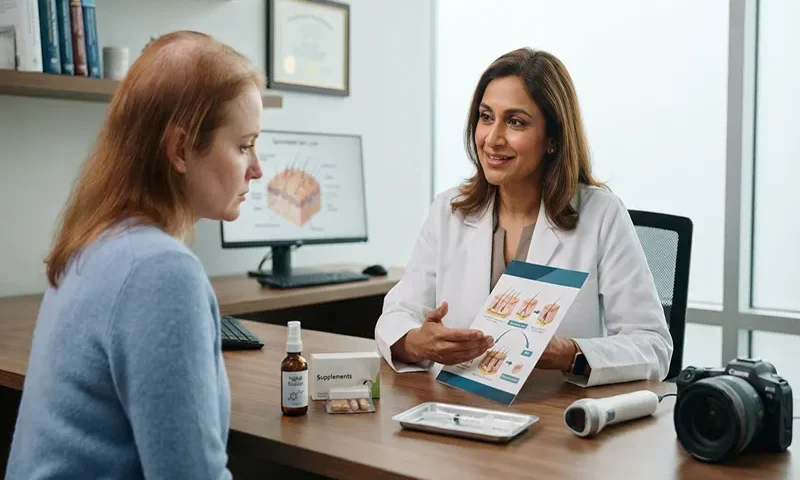
Experiencing sudden, acute hair shedding can be an intensely distressing and shocking event. When clumps of hair begin falling out rapidly or you notice a sudden, stark reduction in your overall volume, the psychological impact can be overwhelming. Many women panic, rushing to buy over-the-counter supplements or harsh topical products in an attempt to stop the loss. However, acute hair loss is vastly different from slow, age-related thinning; it requires immediate, precise clinical evaluation. While unexpected shedding can feel terrifying, modern clinical dermatology offers a sophisticated arsenal of advanced medical treatments, targeted diagnostics, and procedural interventions that successfully halt shedding and restore density.
To treat sudden hair loss effectively, a board-certified dermatologist must first uncover the exact root trigger. Self-treating or guessing at remedies often wastes precious time because acute shedding can stem from diverse etiologies—ranging from severe telogen effluvium brought on by physiological shock, to autoimmune conditions like alopecia areata, or acute exacerbations of underlying female pattern hair loss. Dermatologists utilize advanced diagnostic tools to pinpoint the cause, including trichoscopy (magnified digital imaging of the scalp and hair shafts), targeted scalp biopsies when inflammation or scarring is suspected, and comprehensive blood work. These lab panels evaluate serum ferritin, complete blood counts, comprehensive thyroid functions, and precise hormonal markers to map out an accurate diagnosis.
Once a definitive diagnosis is established, dermatologists deploy gold-standard topical and systemic medical therapies tailored to the specific condition. For acute telogen effluvium or rapid thinning, clinicians frequently utilize topical minoxidil or transition patients to low-dose oral minoxidil (LDOM). Prescribed and monitored under strict medical supervision, LDOM offers powerful systemic compliance, shifting hair follicles out of their premature resting phase and encouraging robust regrowth.
When sudden shedding is driven by inflammatory or autoimmune factors—such as patchy hair loss from alopecia areata—dermatologists turn to targeted anti-inflammatory agents. Topical or intralesional corticosteroid injections delivered directly into the affected scalp areas work quickly to suppress localized immune attacks on hair bulbs, allowing the follicles to recover. Furthermore, if acute shedding is triggered by severe hormonal surges or underlying endocrine disruptions, physicians may integrate targeted anti-androgens or immunomodulatory medications to stabilize the internal environment and protect vulnerable hair roots.
Beyond pharmacological agents, advanced procedural and regenerative dermatology has revolutionized how specialists manage acute hair loss. Platelet-Rich Plasma (PRP) therapy has emerged as a premier treatment. The procedure involves drawing a small quantity of the patient’s blood, processing it in a medical centrifuge to isolate concentrated growth factors, and micro-needling or injecting the nutrient-rich plasma directly into the scalp. This bio-stimulation awakens dormant follicles, decreases localized inflammation, and accelerates vascular healing following severe physical stressors.
Another powerful in-office or physician-prescribed technology is Low-Level Laser Therapy (LLLT). Medical-grade laser caps, bands, and clinical panels utilize photobiomodulation at precise wavelengths—typically between 650 and 680 nanometers—to reduce scalp inflammation and stimulate mitochondrial adenosine triphosphate (ATP) production within hair cells. Additionally, clinical microneedling (collagen induction therapy) is frequently employed to trigger localized wound-healing cascades, upregulate growth factor expression, and dramatically improve the transdermal absorption of concurrent topical medications.
Patients embarking on these clinical paths must maintain realistic expectations regarding the recovery timeline. Hair follicles operate on a notoriously slow biological clock. Whether responding to oral medications, PRP, or corticosteroid therapy, visible reduction in shedding and the emergence of new baby hairs is a gradual process that typically takes anywhere from three to nine months of strict adherence. Patience and consistency are absolute prerequisites for success.
Ultimately, managing sudden hair loss requires expert dermatological partnership rather than guesswork or unverified quick fixes. Your hair is an outward reflection of internal health, and sudden changes demand professional medical decoding. If you are experiencing unexpected, rapid hair shedding, take a proactive step and consult a board-certified dermatologist immediately. By securing a precise diagnosis and deploying advanced dermatological treatments for sudden hair loss, you can halt the shedding, restore your scalp health, and regain your peace of mind.

