
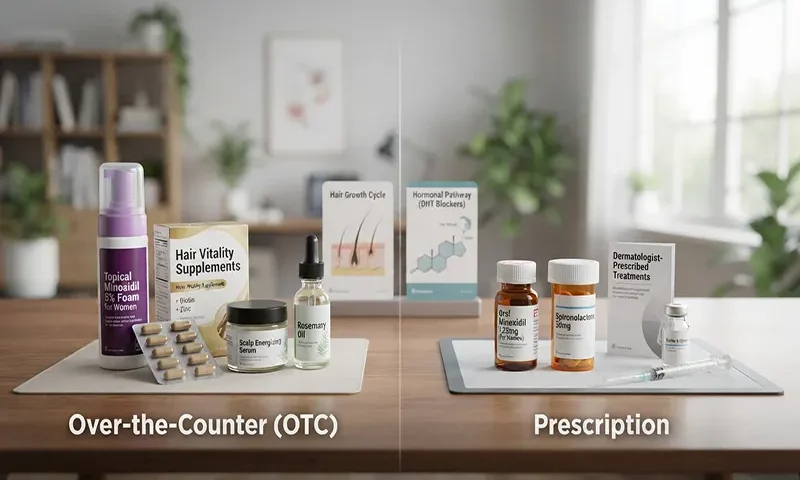
Navigating the modern marketplace for hair restoration solutions can feel overwhelmingly complex. Walking down any pharmacy aisle or browsing online health stores reveals an endless array of shampoos, serums, and vitamins, while specialized dermatology clinics offer advanced clinical therapies. For women experiencing progressive thinning, female pattern hair loss (FPHL), or age-related shedding, the core dilemma often boils down to a fundamental choice: should you start with readily accessible over-the-counter (OTC) products, or is it time to step up to powerful prescription medical interventions? While over-the-counter treatments offer a convenient first line of defense, understanding the clinical differences, efficacy ceilings, and safety profiles of prescription medications is essential for achieving lasting hair restoration.
The journey often begins in the over-the-counter landscape, which provides exceptional accessibility and straightforward first-line care. The undisputed titan of the OTC market is topical minoxidil, available in 2% and 5% solutions or foams. Minoxidil works by widening local blood vessels and opening potassium channels, which successfully prolongs the anagen growth phase of the hair cycle and delivers vital nutrients to miniaturizing follicles. It is accessible without a prescription, relatively easy to incorporate into a daily routine, and backed by decades of clinical data. However, OTC users must navigate realistic expectations: initial shedding often occurs during the first few weeks as resting hairs are pushed out, and maintaining results requires lifelong consistency.
Alongside minoxidil, the OTC landscape is flooded with cosmeceuticals and nutritional supplements, including biotin complexes, marine-protein formulas, and specialized botanical shampoos. While these products can significantly improve overall hair shaft strength, scalp cleanliness, and nutritional baseline, it is vital to recognize their limitations. Cosmeceuticals cannot halt the underlying genetic or hormonal miniaturization driving female pattern hair loss; they act strictly as supportive players rather than primary therapeutic agents.
When OTC measures prove insufficient to halt progressive shedding, patients cross the threshold into the prescription frontier, where targeted medical interventions offer higher efficacy ceilings. One of the most notable advancements in recent years is the rise of low-dose oral minoxidil (LDOM). For women who find topical solutions messy, irritating to the scalp, or difficult to apply consistently, LDOM provides a systemic alternative managed under strict medical supervision. By leveraging sulfotransferase enzymes internally, prescription oral minoxidil delivers robust clinical results for hair density.
Beyond minoxidil, physicians frequently turn to prescription anti-androgen medications to combat the hormonal drivers of hair thinning. Options such as spironolactone, bicalutamide, and off-label finasteride or dutasteride (frequently prescribed for post-menopausal women) function by blocking androgen receptors or inhibiting the enzymes that convert testosterone into dihydrotestosterone (DHT). By shielding vulnerable hair follicles from circulating androgens, these systemic drugs stabilize hair loss and foster a healthier scalp environment. Patients with progressive parting widening or elevated androgens often find that prescription medications succeed where OTC topicals plateau.
Comparing these two categories reveals distinct trade-offs in efficacy, side effects, and patient commitment. OTC topicals offer convenience and a milder side-effect profile—though occasional contact dermatitis or unwanted facial hair growth (hypertrichosis) can occur. Conversely, prescription drugs demand higher clinical oversight, requiring regular blood pressure monitoring, potassium checks (in the case of spironolactone), or strict avoidance during childbearing years. Despite these differences, one universal rule of hair pharmacology applies to both categories: consistency and lifetime maintenance are non-negotiable. Stopping either treatment will cause hair loss to resume within months.
Because selecting the right path depends heavily on your unique physiological profile, self-prescribing or guessing between OTC and prescription options can lead to frustration and delayed care. The necessity of a comprehensive dermatological or endocrinological evaluation cannot be overstated. A professional diagnosis ensures that your treatment is matched accurately to your root cause, whether it is hormonal, nutritional, or genetic.
Ultimately, choosing between over-the-counter and prescription treatments depends on your individual etiology, pattern severity, and lifestyle preferences. If you are noticing persistent thinning, take a proactive step today. Consult a board-certified dermatologist specializing in dermatologist hair loss care to design a personalized, medically sound therapeutic regimen that brings you clarity, confidence, and lasting results.

